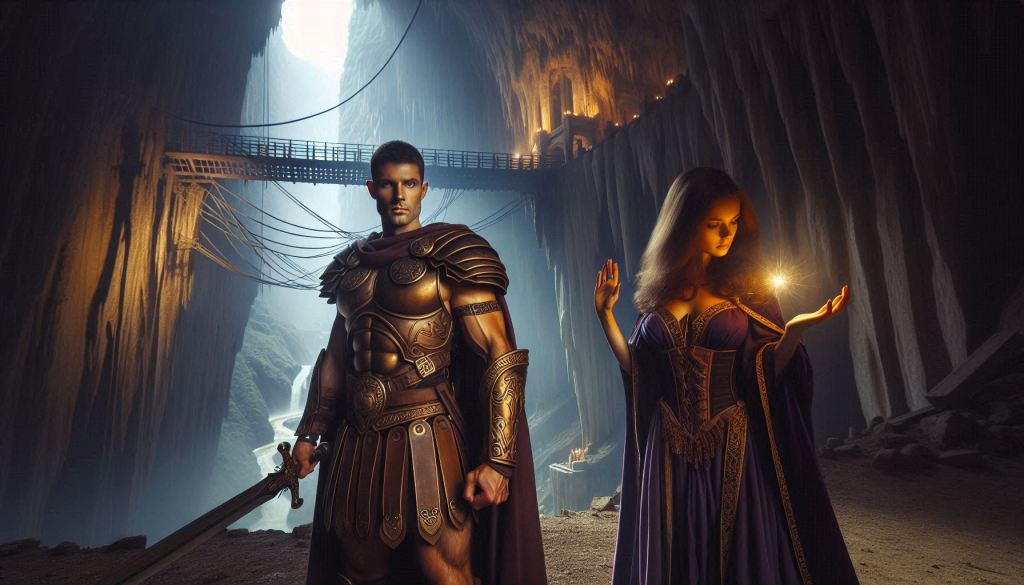
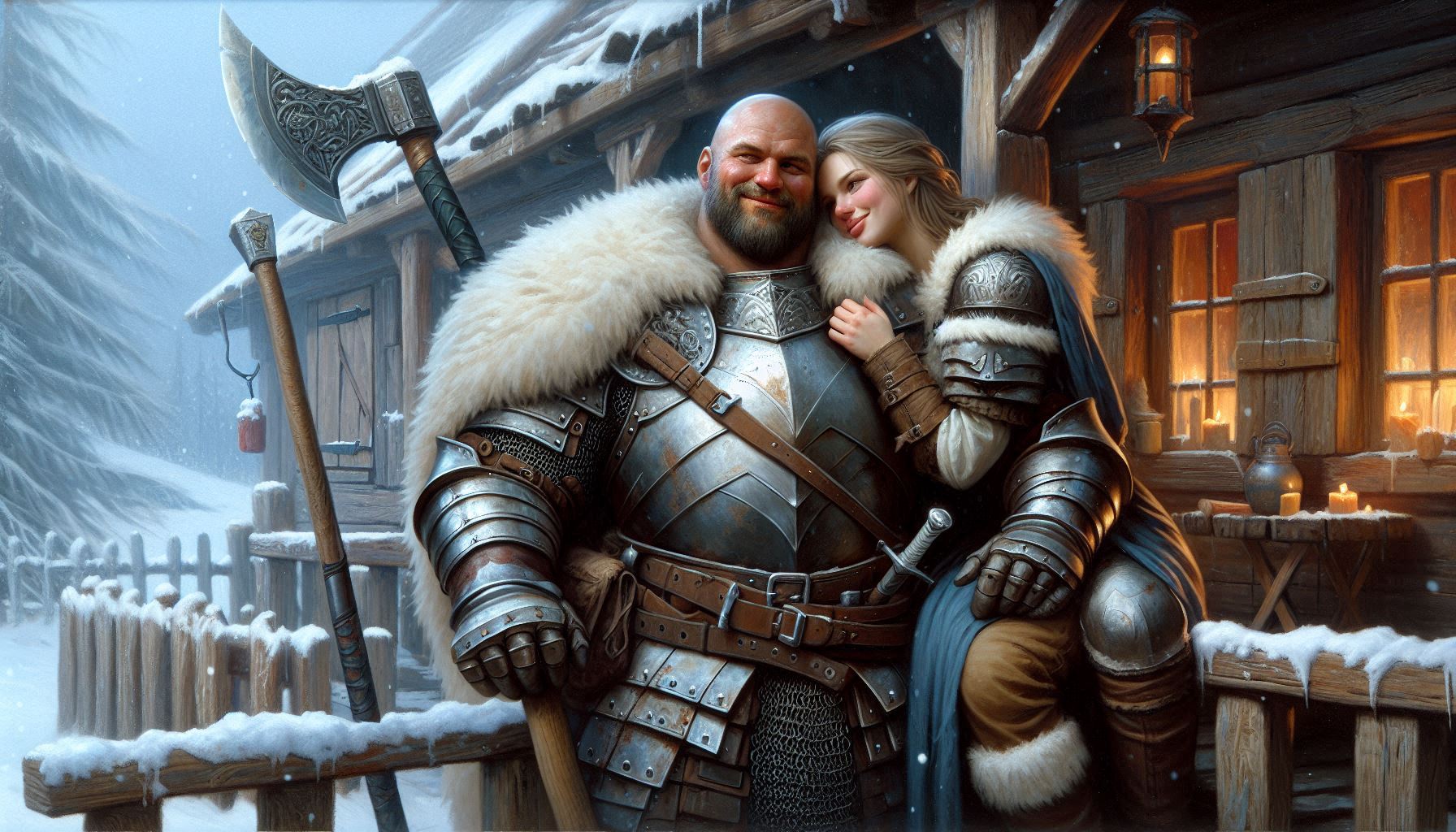
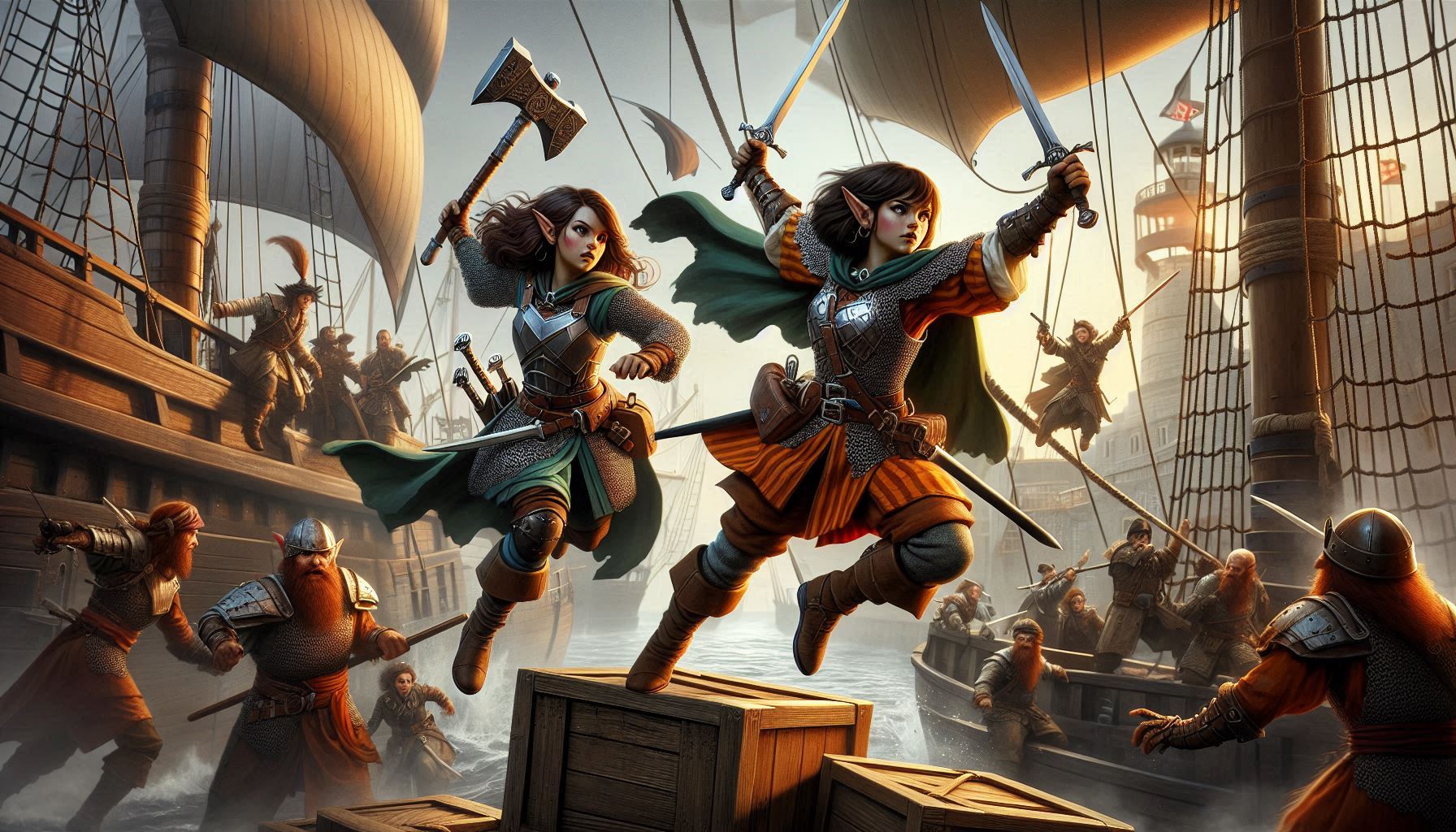
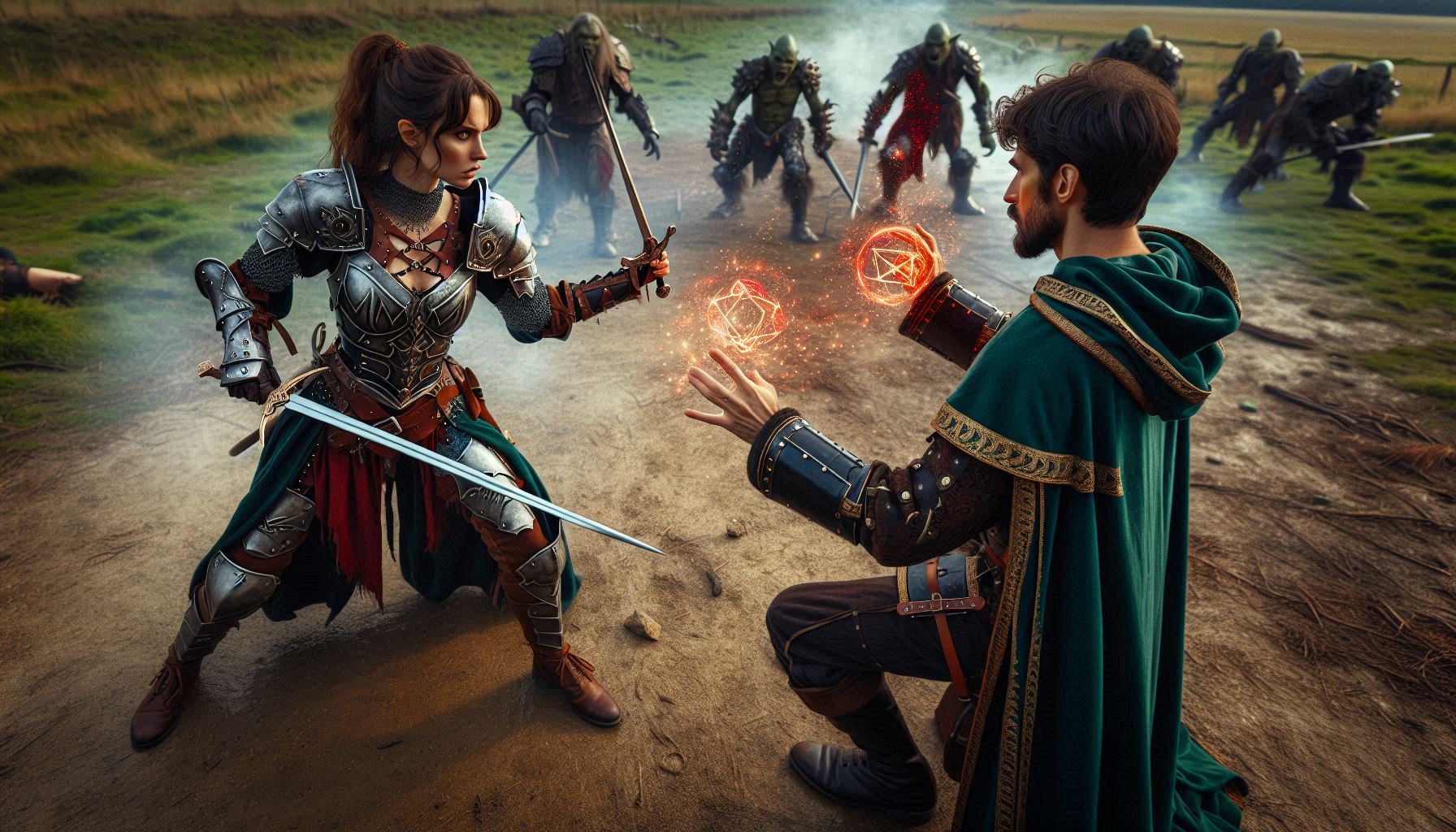
For a few reasons, this has to be the first game I discuss here. For starters, its been my favorite CRPG for 25 years(ish). Second, its the long character write ups I started doing for my characters in that game that really led to this whole web site. Well, that and Icewind Dale, but those games are like well, fraternal twins.
For those unfamiliar, Baldur’s Gate (BG1) is a fantasy role-playing game set in a place known as the Forgotten Realms. The name, Baldur’s Gate, is of a large free city to the north of the Sword Coast. This city becomes the player’s base of operation in the last 1/3 or so of the game. It uses the Advanced Dungeons and Dragons Second Edition Rules. That edition has been superseded by the publisher several times, Fifth Edition (5E) is now current. First Edition (1E) is what I got my start on (a little more complicated than that, but we’ll stick with it for now!), after several years of tweaks and additions 1E got to be sort of a tangled mess. So 2E was created to rationalize it and implement a few new ideas. And it did so very nicely. To my mind, 2E is sort of the pinnacle of the Game’s design. I know that’s contentious these days, younger gamers get very worked up in defending their favorite version of the game. And really, that’s fine. The role-playing game is sort of a community story telling experience; a DM (Dungeon Master) designs a World (or selects a published World) and all the various details that matter; and crafts a series of stories (that may or may not coalesce into a bigger whole) that become the game. Truly, the rule set used does not matter nearly as much as the DM running things and the group of players who bring it all to life. That said, 2E is my version. Its all I’ll run, and probably all I’ll play on computer (although I have and would play another version for someone else DMing).
Computer versions go back Pool of Radiance (1988). But Baldur’s Gate (1998) was a revolution of sorts. It uses what became known as the “Infinity Engine”, which was also used in the sequel and in Icewind Dale. Those three games are responsible for consuming many, many hours of my life. I could describe it all in more depth, but I’m going to assume anyone reading this site has at least passing familiarity with it. The meat of what I want to get to is my character write-ups. Those will be their own posts for each play-through of the whole game.
The game is built on the idea of creating one player character, then recruiting a party of NPCs (Non-Player Characters) who go on a grand adventure together. D&D starts with the idea of a party based adventure, no one character is ever expected to be able to tackle all the world’s challenges on their own. A variety of characters with a variety of skills is needed in most cases. There are four broad categories of character types (Warriors, Priests, Wizards, Rogues) and a balanced party, what the game is designed to work best for, will have characters belonging to each of those groups. Once the player creates their character for the adventure, they will start a process of deciding what characters they need to recruit to form their team.
For me, this is the fun part of the game. Its all the characters that form the party, and how they all compliment each other to form a team. The sequels take this a step further, but I’ll talk more about that in specific posts to follow. One eccentricity I developed from my first play through many years ago; I tried two different clerics (healers) in my party and both of them seemed to complain a lot about my behavior (I was playing a very heroic Paladin, that two Neutral clerics found annoying). So I figured out how to create my own Good cleric to join the party and complain less. Ever since, I will most often create TWO of my characters and recruit the rest of the team from there.
There are a number of challenges related to characters and parties that can be hot topics in game discussions. Some players will try to run with one or more of the character types missing from their party. Other players will run with reduced parties, or even solo runs. These things are all called challenges for a reason. The game does not intend for the player to go this route, and there will be additional difficulties to overcome for the player who does so. For myself, I like a big balanced party. I love the interaction and large party dynamics in game play. But I have done… experiments. I have one of those pending now, so we’ll get to that soon.
Apart from (or maybe concurrent with?!) the character, choosing the alignment you play is the next biggest concern. That mostly means if you want to play the hero or a villain, or something in between. For myself, I always want to be the good guy. That effects a lot of how I play and what I do. It will be a major issue in the write-ups I have coming.
Last thing I wanted to mention here is my current Baldur’s Gate build. I do run the Enhanced Edition (EE) version of the game. That means it includes “Tales of the Sword Coast” which was originally published a year after the main game and provided some new areas to explore. There’s also some new recruitable characters added to the EE version and small quests attached to each of those characters.
I do only play on Core difficulty. That’s the setting where the game most mimics the AD&D 2E rules its based on, and the rules I’ve spent most of my life playing around with.
One little tweak I have is an experience cap remover. The game normally caps out at 161k experience per character. I’m pretty sure there’s not much over 1.2 million total experience available in the game (assuming a normal but complete play through, and no excessive experience harvesting). Indeed, with the cap removed I usually get around 200k for each of the six characters in the party. This is NOT enough difference to make a big difference in game play; that is, the cap is not particularly there for game balance. I believe its just an artifact from when the game was first designed, they had to stop somewhere. Since later games go much higher in experience/levels, the limit here serves no purpose.
I do have a few mods installed. First is Unfinished Business. This adds a number of small plot elements that were cut from the published game, but modders have been able to reconstruct the cut elements to put them back in the game. This is professional quality stuff, that was mostly cut for pure development time issues.
Perhaps the most important mod for BG1 is the “NPC Project“. This adds a lot of interaction with NPCs, and really brings a whole new level of life and depth to the game. It was fan created, and adds content for 30+ characters. I’ve heard some of the quality is inconsistent. But for the characters I usually run with its all pretty well done. Especially Imoen and Jaheira; you’ll wonder how you ever made do without…
I also have the “classic movies” mod. This restores a lot of transition material that was either cut or redone for the EE version of the game. Sadly this is one area where I feel like the original content was vastly better.
I have Tweaks mod, which adds a ton of “quality of life” type improvements. Like unlimited stacking of some inventory items (I don’t care if carrying 900 arrows is unrealistic, its a pain to work with small bundles of many such things!). There’s really a lot more to it, I highly recommend this mod to any player.
I also use the “Level 1 NPCs” mod, which actually let’s you rebuild various recruitable NPCs to look more like you would have designed them in the first place. This mod is obviously easy to abuse (but no more than EEKeeper, a save game editing utility). I’ve used it for things like turning the thief Alora into a fighter/thief and Dynaheir from a specialist mage to a standard mage.
Finally I have a “Voices” mod that puts all the voice sets from the various Infinity Engine games into Baldur’s Gate. Yeah you guessed it, I have this mod on all my Infinity Engine games!
I have separate posts up for “Siege of Dragonspear” and “Shadows of Amn (BG2)”. I mostly consider these all the same game. Certainly, anytime I create a new character for Baldur’s Gate I fully expect to take them all the way through the saga to the end of BG2. In fact, I often just think of them all as “Baldur’s Gate” and don’t really distinguish between them. Those looking at my “Category” search function will see all of these are just tagged “Baldur’s Gate”. But there are some issues, distinctions, that make me want to say a little about each in turn.
 DavesGaming
Leave a comment